
Blog posts tagged "Drones"
Learning how to fly. Again. Because certain technologies and processes can always be optimized. Take laptops, for instance (I always wanted to become a laptop designer!). From foldable screens to computers that incorporate e-readers, we are always pushing for new designs that address ergonomic requirements but also improve the way we work
October went fast, full of news and packed with interesting robotics applications. This month certainly doesn’t need an intro, so we will let the news take all your attention. ROS CVE alert- ensuring security for robotics Early in October 2021, Open Robotics registered a CVE security vulnerability that affects ROS Kinetic, Melodic and
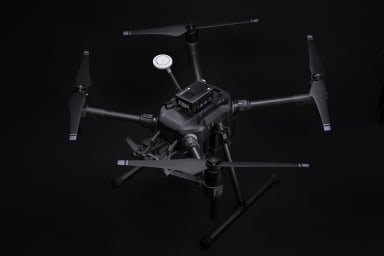
Drones, and their wide-ranging uses, have been a constant topic of conversation for some years now, but we’re only just beginning to move away from the hypothetical and into reality. The FAA estimates that there will be 2 million drones in the United States alone in 2019, as adoption within the likes of distribution, construction,
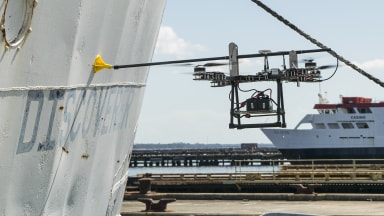
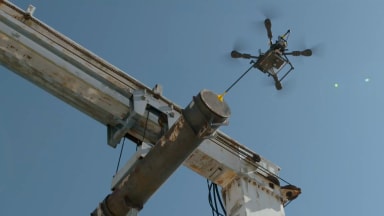
In 2016, 16% of all workplace deaths in the US were attributed to falls. Apellix, a Florida-based start up, who specialise in aerial robotics aims to reduce this number by using their drones in place of workers to complete tasks in elevated or dangerous environments. In tandem, these same aerial robotics can also reduce the
This is a guest blog by Jamie Branch, Corrosion Engineer at Apellix. Collaborative robots, or cobots, work side by side with humans to enhance human worker’s ability to perform their job safer, with less monotony and repetitive tasks. Most of us are familiar with industrial robots and it should be no surprise that people
Apellix, an emerging leader in the field of aerial robotics, are creating innovative industrial solutions with the help of Ubuntu. The development of aerial robotic systems to carry out tasks at height has taken the responsibility of dangerous activity away from human workers. With 150 workers dying everyday in the USA as a result of
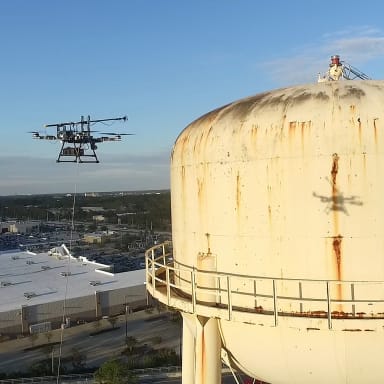
This is a guest blog by Jamie Branch, Corrosion Engineer at Apellix. In the United States alone, 849 workers lost their lives in 2016 from falling while on the job. In the construction industry specifically, falls are the leading cause of worker fatality. At Apellix, we utilise Ubuntu and proprietary software to create innovative industr

The market for drones is exploding as businesses and individuals embrace them. The global market for commercial applications of drone technology will balloon to as much as $127 billion by 2020 up from £2billion today (PWC.) Aerotenna is one of those innovators making this vision a reality. Aerotenna’s award-winning technology seeks to sol
Did you know that the consumer drones market will sit at 67.7 million units annually by 2021? *That’s ten times more than 2015! This shows staggering growth that reflects the sheer importance of the Robotics market now and in years to come. Not only will every industry be impacted, but new categories will be created
Parrot collaborates with Canonical to launch the Parrot S.L.A.M.dunk, a new development kit for the creation of autonomous and obstacle avoidance drones and robots. Powered by Ubuntu and ROS (Robot Operating System), it gives developers a familiar environment to prototype solutions such as autonomous driving, 3D mapping, or simply using t
Today, at TechCrunch Disrupt, the next generation of remote controlled drones is being unveiled by UAVIA, powered by Snappy Ubuntu Core. For the first time, UAVIA is demonstrating a new generation of completely remote controlled drones. The first being used for inspection and surveillance. This will be the first time that 100% remotely op
Wouldn’t it be great to play with toys and get paid for it? If this sounds like music to your ears, then this blog post is for you. If you are a business person who thinks toys are just child’s play, then you should read on as well! It’s true that Industrial IoT will generate
PreambleDelivering your Charms to the community can seem like an uphill climb when youhave minimal and manual testing around your project. The ~charmer review process ispretty rigerous and as anyone who has run the Gauntlet to attain ~recommendedst
IoT World was an eye opener for many. The same open source operating system that everybody loves from the cloud now powered the first smart fridge with apps from GE, the first Ubuntu Core drone with apps from Erle-Robotics, industrial gateways with apps, Pengiun Computing professional top of the rack switches with apps, Acer smart home hu
Drones are getting Snappy Autopilot Apps. On Indiegogo you can contribute to the PixHawk Fire (PXF). The PixHawk Fire (PXF) is an open hardware cape (daughter board) for the BeagleBone Black that allows you to create Snappy autopilot apps for drones. Behind the cape there is Erle Robotics, a startup based in Spain and led
Erle-Robotics just showed the world how Snappy Ubuntu Core can power the autopilot in their Erle-Copter drone and push drones to their limits. It is a really cool video but the message is a lot bigger. If you are a drone manufacturer or just a drone hobbyist, you might be an expert in building the