

Tytus Kurek
60 posts

Happy birthday, OpenStack! It’s astonishing how fast time flies – fifteen years already. Yet, here we are: OpenStack cloud still stands as a de facto standard for open source cloud infrastructure implementation. It powers thousands of organisations around the world, across telco, finserv, public sector, IT, research, manufacturing and mor

Setting up a proof of concept (PoC) environment is often one of the first steps in any IT project. It helps organizations to get to grips with the technology, validate the idea, and identify any potential risks. However, setting up an OpenStack PoC has always been a challenge due to the overall complexity of the

Effective July 23rd, 2025 the Open Infrastructure Foundation (OIF) has officially joined one of the world’s largest and most influential open source communities: the Linux Foundation. This strategic move reflects the accelerating trend toward open source standardization and democratization – a movement Canonical has proudly supported sinc
The rapid growth in OpenStack installation and orchestration tools that we have seen in recent years has effectively established OpenStack as the world’s leading open source cloud platform. Projects like Sunbeam or Kolla Ansible, for example, are effectively transforming OpenStack into yet another user application. By using containers and
One of the biggest challenges that cloud service providers (CSPs) face these days is to deliver an extension of the public cloud they host to a small-scale piece of infrastructure that runs on customers’ premises. While the world’s tech giants, such as Amazon or Azure, have developed their own solutions for this purpose, many smaller,

We’ve all heard about cloud-native applications in recent years, but what about cloud-native infrastructure? Is there any reason why the infrastructure couldn’t be cloud-native, too? Or maybe it’s already cloud-native, but you’ve never had a chance to dive deep into the stack to check it out? What does the term “cloud-native infrastructur

In the ever-evolving landscape of cloud computing, the concept of a sovereign cloud has recently emerged in response to data management challenges. As governments increasingly recognise the importance of safeguarding their data, ensuring compliance with local regulations, and asserting digital autonomy, sovereign cloud solutions have gain
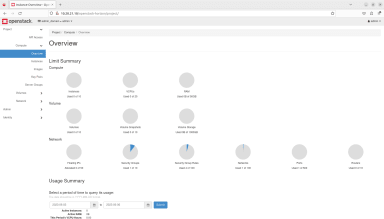
Whenever it comes to a small-scale private cloud infrastructure project roll-out, organisations usually face a serious dilemma. The implementation process often seems complex due to a lack of knowledge, tricky migrations and an immediate need from management to run various extensions, such as Kubernetes, on top. The most obvious way to ov

Telco cloud implementation with Canonical and HPE Service providers need cloud infrastructure everywhere, from modern 5G and 6G network functions running in the network core to sophisticated AI/ML jobs running on the edge. Given the sensitivity of those workloads to any interruptions, outages or performance degradations, the cloud infrast
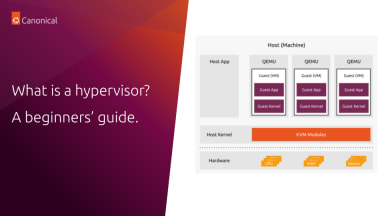
In the realm of virtualisation and cloud computing, the hypervisor is a critical component that enables the seamless operation of multiple virtual machines (VMs) on a single host. While virtualisation is a technology, the hypervisor is its actual implementation. In this beginner’s guide, we will explore the fundamentals of hypervisors, th

While information technology continues to evolve rapidly, virtualization remains a cornerstone of modern computing, enabling businesses to maximise resource utilisation, enhance flexibility, and reduce the total cost of ownership (TCO). It is a key building block of the cloud computing paradigm, and millions of organisations use it daily

Heads up! The OpenInfra Summit Vancouver 2023 is coming!!! After the successful resurrection of the event in Berlin last year, the OpenInfra Summit is back as an in-person event again. The conference will take place in Vancouver, Canada, on June 13-15. As usual, Canonical will be there to share the latest news about OpenStack and

ChatGPT has been the talk of the town for more than four months now. As the first ever artificial intelligence (AI) -powered chatbot, it has quickly gained immense popularity, helping students, engineers and even executives generate content, write and debug code and run market analyses. But could ChatGPT be used for anything other than na

Cloud repatriation is undoubtedly one of the hottest trends in the cloud infrastructure space as of 2023. It enables organisations to regain control of their cloud spend, workloads and data. According to a report on cloud repatriation by 451 Research group, 48% of IT decision makers confirmed that they had moved their applications away fr
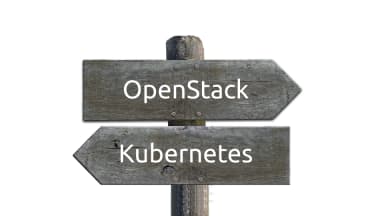
Kubernetes vs OpenStack is a common dilemma that organisations face when considering the modernisation of their IT infrastructure. Both are well-established open-source technologies for building cloud infrastructure, and both bring tangible benefits, especially when used in combination. Yet, they differ significantly and need to be proper
Cloud optimisation enables organisations to significantly lower their cloud spending while ensuring the desired performance and necessary compliance. It’s a process that every business should adopt when choosing cloud infrastructure as a foundation for their applications. It’s been proven that applying cloud optimisation best practices le