
Blog posts tagged "machine learning"

The financial services sector is adopting Artificial Intelligence technologies at a growing rate. Areas such as asset management, algorithmic trading, credit underwriting, blockchain based finance solutions, fraud detection and claims processing have all seen increased adoption of Machine Learning to drive more robust data-driven decision
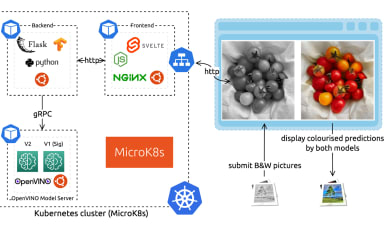
This blog is the last part of a series – don’t miss parts one and zero. We’re on a mission to demonstrate OpenVINO™ on Ubuntu containers; from the consistently outstanding developer experience to the added trust to your software supply chain. In this blog, I’ll guide you on your way to building and deploying an
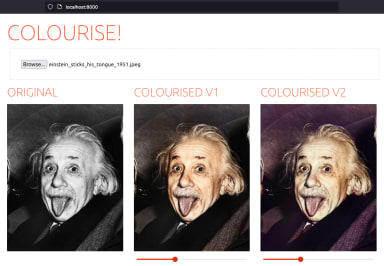
Christmas is coming, but you don’t have a present on hand for your (grand)parents (Mom, Dad, if you’re reading this – I promise this post isn’t drawn from real life!). Looking for a solution? If your loved ones happened to live through the era of monochrome photography, keep reading. You can work some magic with
Intel and Canonical collaborate to build and publish OpenVINO™ container images based on the Ubuntu ecosystem. This work aims to provide trusted, secure, and developer-friendly container images for AI/ML applications in many industries. The provenance challenge facing cloud software Today, cloud-native developers benefit from an abundance
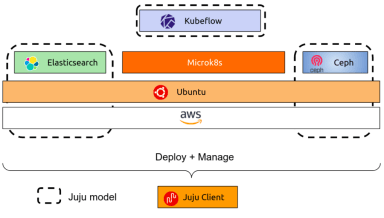
What is Kubeflow? Kubeflow is the open-source machine learning toolkit on top of Kubernetes. Kubeflow translates steps in your data science workflow into Kubernetes jobs, providing the cloud-native interface for your ML libraries, frameworks, pipelines and notebooks. Read more about Kubeflow Notebooks in Kubeflow Within the Kubeflow dashb

In this post we’ll explore the concepts of data lake, data hub and data lab. There are many opinions and interpretations of these concepts, and they are broadly comparable. In fact, many might say they’re synonymous and we’re just splitting hairs. Let’s look again.
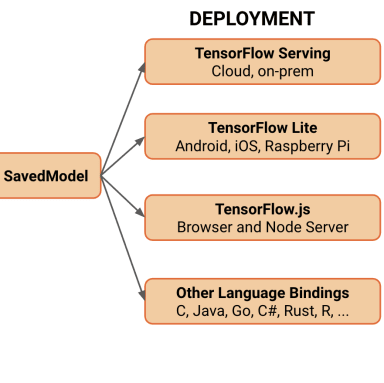
TL;DR: How you deploy models into production is what separates an academic exercise from an investment in ML that is value-generating for your business. At scale, this becomes painfully complex. This guide walks you through industry best practices and methods, concluding with a practical tool, KFServing, that tackles model serving at scal
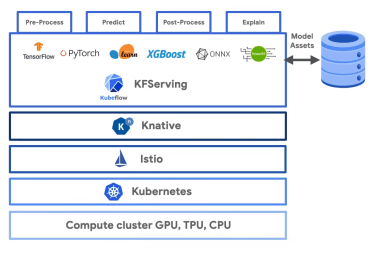
TL;DR: KFServing is a novel cloud-native multi-framework model serving tool for serverless inference. A bit of history KFServing was born as part of the Kubeflow project, a joint effort between AI/ML industry leaders to standardize machine learning operations on top of Kubernetes. It aims at solving the difficulties of model deployment to

Data is the new oil, and Artificial Intelligence is the way to monetize it. According to an IDC report, Artificial Intelligence (AI), alongside 5G, IoT, and cloud computing, is one of the technologies reshaping the telecom industry. From data-driven decisions to fully automated and self-healing networks, AI developments are accelerating i

During GTC last fall, NVIDIA announced an increased focus on the enterprise datacenter, including their vision of the datacenter-on-a-chip. The three pillars of this new software-defined datacenter include the data processing unit (DPU) along with the CPU and GPU. The NVIDIA BlueField DPU advances SmartNIC technology, which NVIDIA acquire

10 minutes tutorial on how to set up Ubuntu for machine learning, data science and data analytics using NVIDIA RAPIDS, NGC Containers and Anaconda.

This blog series is part of the joint collaboration between Canonical and Manceps. Visit our AI consulting and delivery services page to know more. Introduction Kubeflow Pipelines are a great way to build portable, scalable machine learning workflows. It is a part of the Kubeflow project that aims to reduce the complexity and time involv

A growing number of car companies have made their autonomous vehicle (AV) datasets public in recent years. Daimler fueled the trend by making its Cityscapes dataset freely available in 2016. Baidu and Aptiv respectively shared the ApolloScapes and nuScenes datasets in 2018. Lyft, Waymo and Argo followed suit in 2019. And more recently, a

Kubeflow Pipelines are a great way to build portable, scalable machine learning workflows. It is one part of a larger Kubeflow ecosystem that aims to reduce the complexity and time involved with training and deploying machine learning models at scale. In this blog series, we demystify Kubeflow pipelines and showcase this method to produce
AI/ML model training is becoming more time consuming due to the increase in data needed to achieve higher accuracy levels. This is compounded by growing business expectations to frequently re-train and tune models as new data is available. The two combined is resulting in heavier compute demands for AI/ML applications. This trend is set t

Machine Learning and AI in 2019: A recent survey conducted by Dresner Advisory Services shows Machine Learning and AI to rank as highest priority for enterprises. R&D, Marketing, Sales, Insurance, Fintech, Telco, Retail and Healthcare enterprise rank machine learning as their biggest bet and believe it is critical to their success. “2019