
Blog posts tagged "Public cloud"

ChatGPT has been the talk of the town for more than four months now. As the first ever artificial intelligence (AI) -powered chatbot, it has quickly gained immense popularity, helping students, engineers and even executives generate content, write and debug code and run market analyses. But could ChatGPT be used for anything other than na
We are happy to announce that Ubuntu Pro is now available as a native product on AWS. You can now enjoy premium enhanced security coverage for your Ubuntu machines by launching Ubuntu Pro instances from the EC2 console with no additional requirements, subscriptions or long term commitments. Why is this good? Ubuntu Pro features now
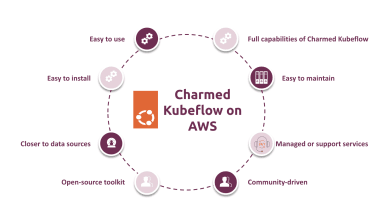
Run an MLOps toolkit within a few clicks on a major public cloud Canonical is proud to announce that Charmed Kubeflow is now available as a software appliance on the Amazon Web Services (AWS) marketplace. With the appliance, users can now launch and manage their machine learning workloads hassle-free using Charmed Kubeflow on AWS. This

Cloud repatriation is undoubtedly one of the hottest trends in the cloud infrastructure space as of 2023. It enables organisations to regain control of their cloud spend, workloads and data. According to a report on cloud repatriation by 451 Research group, 48% of IT decision makers confirmed that they had moved their applications away fr

Gartner forecasts that worldwide end-user spending on public cloud services will grow 20.7% from $490.3 billion in 2022 to $591.8 billion in 2023. By 2026, the Public Cloud market will double its size today to $1 trillion, also predicted by Gartner. AWS, Microsoft Azure, and Google Cloud all maintained double-digit growth in Q4 2022, espe
Cloud optimisation enables organisations to significantly lower their cloud spending while ensuring the desired performance and necessary compliance. It’s a process that every business should adopt when choosing cloud infrastructure as a foundation for their applications. It’s been proven that applying cloud optimisation best practices le
Public clouds enabled digital transformation at unprecedented speed. But their operational costs over time can be exacting as compute needs increase. Hybrid clouds emerged as an alternative to gain the benefits of both worlds: private infrastructure that allows for lower operational expenditures and tighter control, and public clouds that

The fastest path towards Linux server management at scale is to leverage technology system administrators know. It is now possible to manage your Debian Bullseye machines with Landscape.
AWS re:Invent is a learning conference hosted by Amazon Web Services for the global cloud computing community. The in-person event features keynote announcements, training and certification opportunities, access to technical sessions, and so much more. Canonical is proud to sponsor AWS re:Invent this year and have presence on the Expo. Jo
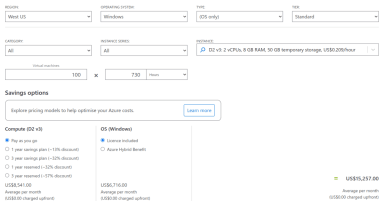
Have you ever wondered how Azure pricing actually works? So, you’ve decided to use Azure as your primary cloud platform and want to calculate your infrastructure costs. You estimate them based on listed prices, and rest assured that your startup/project will meet its budget. And then, suddenly, at the end of the month, you receive
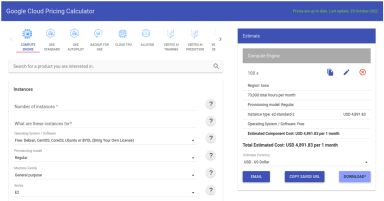
Have you ever wondered how GCP pricing actually works? If you’re embarking on a new project and evaluating public clouds, the cost involved will be one of your main considerations. You might decide to use Google Cloud Platform (GCP) as your primary cloud platform. If so, you’ll want to estimate costs based on listed prices.
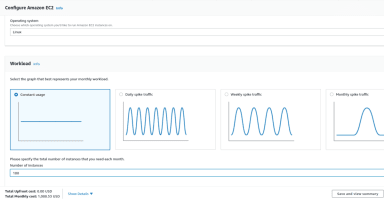
Have you ever wondered how AWS pricing actually works? You launch a startup or a new project in your organisation. You decide to use Amazon Web Services (AWS) as your primary cloud platform. You estimate costs based on listed prices, and rest assured that your startup/project will meet its budget. However the actual bill does
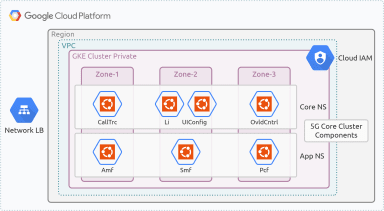
This is the second blog in a series focusing on how telecom operators can leverage public clouds to meet their business demands. In a previous blog, we talked about Amazon Web Services (AWS) and how its services made it possible for telcos to shift towards public clouds. In this blog, you’ll get to know about

Are you looking to host your own ERP cost-effectively, or perhaps evaluating solutions to host other types of applications for your small business? Learn how you can do that with LXD.
The last few years have brought immense change in telco technology adoption trends, with the introduction of 5G, artificial intelligence (AI), the internet of things (IoT), cloud computing, and mobile edge computing. So, finally, telcos are evolving? Yes, 5G has dramatically enhanced the radio access network and core network. The advent
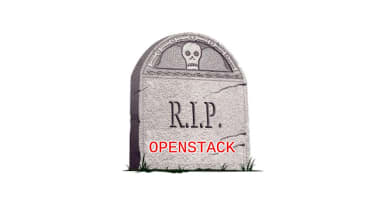
Austin, Texas – 3rd of March 2022 – OpenStack is dead! A masked man in a black cloak with “public clouds”, “containers” and ”serverless” inscriptions shot OpenStack straight in the heart. OpenStack fell to the ground and with the last moment of strength exclaimed: “Long live open infrastructure”! That could be a headline of a