
Blog posts tagged "robotics"

Canonical ROS ESM customers now can access a long-term supported ROS and Ubuntu environment by the Ubuntu and ROS experts. Learn more about ROS ESM. 6 April 2021: Canonical and Open Robotics announced today a partnership for Robot Operating System (ROS) Extended Security Maintenance (ESM) and enterprise support, as part of Ubuntu Advantag
Developing robots is not like building apps or IoT devices. Robots balance complex features such as scene awareness, social intelligence, physical intelligence, communication, dialogue, learning from interaction, memory, long-term autonomy, safe failure… the list goes on and on. As a result, robotics startups can take years to get to a m
The Ubuntu in the wild blog post ropes in the latest highlights about Ubuntu and Canonical around the world on a bi-weekly basis.
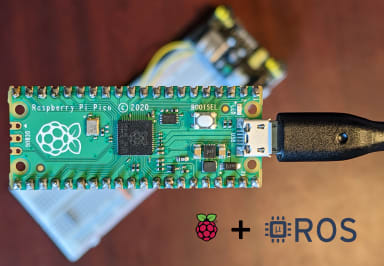
In this post we will see how the Raspberry Pi Pico can natively speak to a ROS 2 graph using micro-ROS. We will set up a project in VSCode, compile and upload it to the microcontroller. We thus assume that you are somewhat familiar with ROS 2 development and VSCode. What is this all about?
And that was February! A month where a rover showed what perseverance means and a small drone what ingenuity looks like. February will be remembered as the month where two robots landed on Mars, telling us all to “dare mighty things”. Perseverance and Ingenuity Do you want to know what Mars sounds like? Well, here
A new start? 2020 came and went, and in the process, it left a mark in history and our lives that won’t be erased. Together, as a community, we all struggled, we all faced new challenges, we all united and did our best to help each other. We are grateful for the effort of our
Goodbye Thanksgiving (well, for some of us), hello Christmas! The holiday season really is the best, and it always brings interesting robotics news, which we will now distill into a quick dose of delightful and easily-digestible tidbits. As always, if you’d like to see your work showcased here, please send an email to robotics.community@c

Kubernetes and robotics make a great match. However, as we have seen, robots running ROS 2 can be tricky to set up on Kubernetes. This blog series has explored running ROS 2 on Kubernetes, set up a simple talker and listener, and distributed that demo across three machines. The configurations presented may not quite fit
Kubernetes and ROS make a great match, but ROS2 can be tricky to set up. In this post we demonstrate a scalable system with MicroK8s on Ubuntu.
This post marks the one year anniversary of the Ubuntu Robotics newsletter: the place we showcase our work and discussing cool robotics happenings.
Come and connect with the Ubuntu robotics team on November 12th to answer all of your questions. This is the first time ROSCon has ever been virtual and is the first time it’s ever been free to attend, so we’re looking forward to seeing tons of new faces! We have ROS experts and field engineers ready and waiting to talk.

Construct a prototype ROS 2 system distributed across multiple computers using Kubernetes. Our goal is not only to provide you with a working configuration, but also to help you understand why it succeeds and overcome future design challenges.

The myriad of different fields that make up robotics makes QA practices difficult to settle on. Field testing is the go-to, since a functioning robot is often proof enough that a system is working. But online tests are slow. The physical environment must be set up. The entire system has to be in a workable
So that’s the summer gone (hopefully, that heat was awful). Or winter if that’s where you are. Seasons change and so does the state of robotics. Fortunately, that’s what we’re here for. Before we get into it, as ever, If you’re working on any robotics projects that you’d like us to talk about, be sure
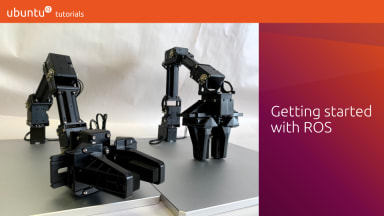
ROS, the Robot Operating System, is the platform of choice for robot development. However, the breadth and depth of existing documentation can be daunting for the ROS beginner. Where should you start learning about ROS 2 on Ubuntu? All robots based on ROS and ROS 2 are programmed using five simple but core constructs: Nodes
The snapcraft CLI (the tool used to create snaps) has long had support for building snaps that use both ROS 1 and ROS 2. ROS 2 Foxy Fitzroy is the latest ROS 2 LTS, which runs on Ubuntu 20.04 (Focal Fossa). The snapcraft CLI recently gained experimental support for building Foxy snaps, so I wanted