
Blog posts tagged "snapcraft"

A little later than usual, we’ve collected some of the snaps which crossed our “desk” (Twitter feed) during May 2019. Once again, we bring you a suite of diverse applications published in the Snap Store. Take a look down the list, and discover something new today. Cloudmonkey (cmk) is a CLI and interactive shell that

Niryo has built a fantastic 6-axis robotic arm called ‘Niryo One’. It is a 3D-printed, affordable robotic arm focused mainly on educational purposes. Additionally, it is fully open source and based on ROS. On the hardware side, it is powered by a Raspberry Pi 3 and NiryoStepper motors, based on Arduino microcontrollers. When we found

Snaps. The final frontier. These are the voyages of the OSS Snapcraft. Its continuing mission, to provide snap users with simple, clear and effective tips and tricks on how to build and publish their applications. In this tutorial, we are going to talk about confinement and interfaces – how to restrict what your snaps can

Last week, we published Introduction to snapcraft, a tutorial that provided a detailed overview of the snap build process. We touched on the concepts like snap ecosystem components, snapcraft command line, snapcraft.yaml syntax, and more. We’d like to expand on the first lesson, and today, we are going to talk about parts and plugins, use

It was another busy iteration for the web and design team, trying to get a lot of work wrapped up before we head off to Lyon, France for our 19.10 Roadmap cycle kick-off.
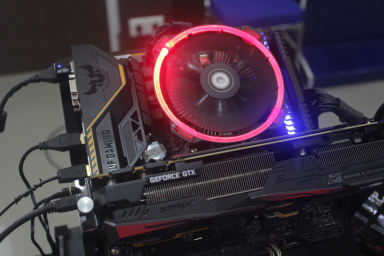
We often feature and promote applications and games in the Snap Store and via our social media channels. Perhaps unsurprisingly, games are popular among our followers, and our users. There are a few great games already in the Snap Store, but there’s always room for more! Snap lends itself well to packaging and distributing free

April was another exciting month for the Snapcraft team with Microsoft releasing Visual Studio Code as a snap. As usual, we had hundreds of other new apps come to the snap store and here are a few of our favourites. MiniZinc is a free and open-source constraint modeling language. Model constraint satisfaction and optimization problems

Travis CI is a hosted, distributed continuous integration (CI) service used to build and test software projects hosted on GitHub, and free for anyone working on open source projects. Often regarded as the home of open source testing, Travis CI enables developers to automate their build without the need to set up their own servers.
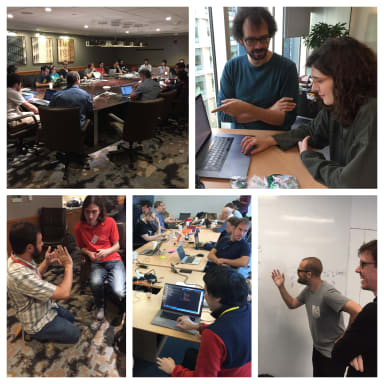
Following previous events in New York, Seattle, and London, the fourth Snapcraft Summit is taking place in Montreal, Canada from June 11th to 13th 2019. We have partnered with Travis CI this time and also expanded the scope of the event to three tracks. Snapcraft Summit Snapcraft is the universal app store for Linux that
This was a fairly busy two weeks for the Web & design team at Canonical. Here are some of the highlights of our completed work. Web team Homepage takeovers This iteration we designed and built four takeovers for our home pages including: The German version of compliance webinar The German version of AI/ML webinar A
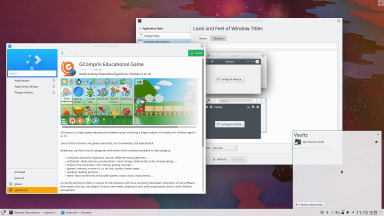
During February 2019 we celebrated another fine Plasma release with our friends at KDE by showcasing a month of KDE snaps on the Snapcraft Twitter and other social accounts. The KDE developers have done amazing work to create an SDK that simplifies making snaps of KDE applications and they also publish a common KDE framework

Data backups are arguably the most important part of one’s software setup. While many scenarios fall into the realm of if, data loss belongs in the when domain. Over time, every one of us will experience some kind of hardware failure, be it an optical disk, a hard disk or a lost phone. It is

At the end of last year, we shared an infographic highlighting the adoption of snaps by users for their desktop, server or IoT devices. Those snaps wouldn’t be available without the growing number of developers building them behind the scenes. But why have developers, including those from some of the world’s largest software companies, de
Snapcraft squad Report a Snap Last year, a snap was found in the Snap Store using computing resources for bitcoin mining without user consent. This software was retired from the Store after further investigation and highlighted the need for snapcraft.io users to report potential snaps violating trademark, copyright or terms and conditions
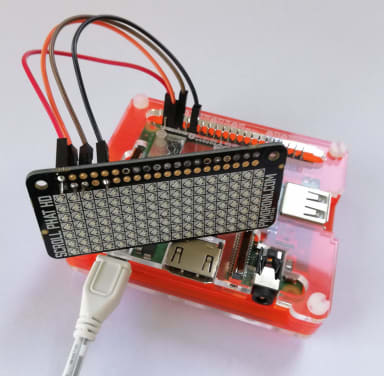
My current job involves me mostly working in the upper layers of the desktop software stack however I started out working in what was then called embedded engineering but now would probably be know as the Internet of Things (IoT). I worked on a number of projects which normally involved taking some industrial equipment (radio

People frequently tell me they’d like to make a snap of an application they care about. Whether it’s in person at events like FOSDEM, or online via IRC or Telegram, there are developers who want to share their Linux software creations with the world, and snaps are designed exactly for this. We have run a